SPI Detection: How to Identify Solder Paste Issues in SMT
Published Time:
2026-03-23
Solder paste inspection (SPI) is vital in SMT production, ensuring solder paste quality and consistency. It uses automated vision systems to detect issues like insufficient, excessive, or misaligned paste, improving quality and efficiency.
In the world of Surface Mount Technology (SMT), solder paste application is one of the most critical steps in the production of high-quality printed circuit boards (PCBs). However, any inconsistencies in this step can lead to defects that affect the overall performance and reliability of the PCB. This is where SPI (Solder Paste Inspection) plays a crucial role.
But what exactly is SPI, and how does it help detect solder paste problems?
What is SPI?
.png?w=1600&h=1000)
SPI stands for Solder Paste Inspection, and it refers to the process of inspecting the quality and consistency of solder paste applied to the PCB pads before component placement begins. SPI systems use advanced optical technology to measure the height, volume, and placement accuracy of the solder paste deposits.
This inspection is typically automated and performed in-line during the SMT production process, ensuring that any potential issues are detected early, preventing costly rework or defective boards.
Why is SPI Important?
Solder paste is the critical foundation of solder joints, providing both mechanical and electrical connections between the PCB and its components. If the solder paste application is inconsistent, it can result in a range of defects that compromise the final product.
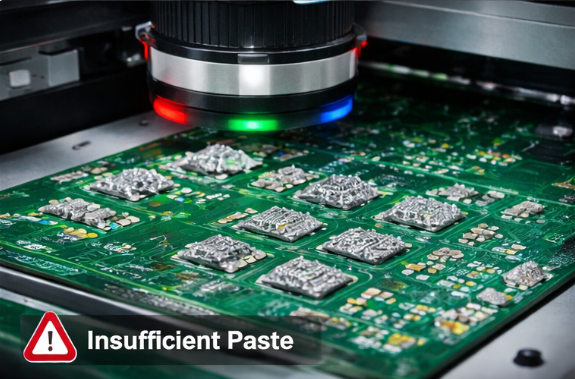
- Insufficient solder pastecan lead to weak or unreliable solder joints.
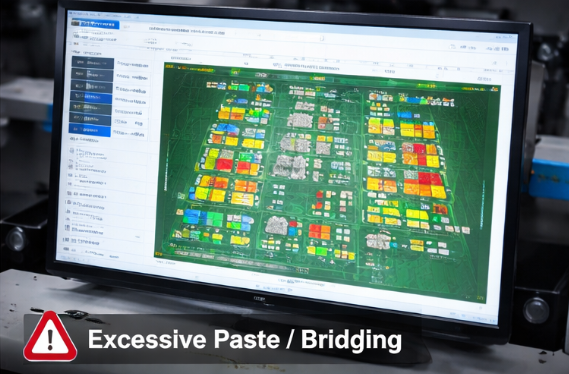
- Excessive solder pastecan cause bridging, where solder connects adjacent pads, potentially shorting the circuit.
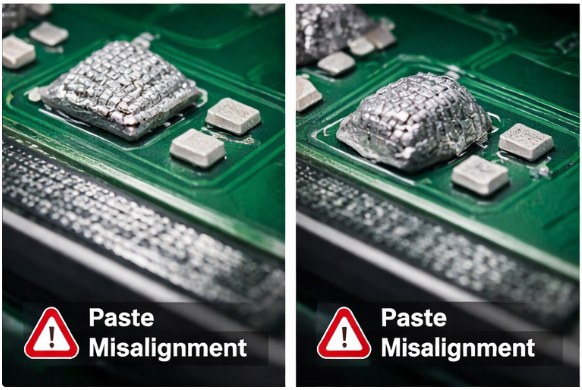
- Misalignment of pastecan affect the accuracy of component placement, causing defects like tombstoning (when a component lifts off the board).
SPI ensures that the solder paste is applied precisely, minimizing these risks and ensuring the board’s functionality.
Key Problems SPI Can Detect
SPI systems are designed to detect a range of solder paste-related issues that could cause problems during the subsequent stages of SMT assembly:
- Insufficient Paste Volume
- If there is not enough paste on the PCB pads, it leads to weak solder joints. SPI can measure the volumeof paste deposited on each pad to ensure it meets the required specifications.
- Excessive Paste Volume
- Too much paste can result in solder bridges(short circuits between pads), leading to potential failures in the electrical circuit. SPI detects excess paste before component placement.
- Solder Paste Misalignment
- Misalignment of the solder paste stencil can result in paste being applied to the wrong pads. SPI systems can detect this misalignment, ensuring that paste is precisely applied to the correct locations.
- Solder Paste Shape Issues
- The shape of the paste deposit is crucial for proper soldering. SPI can identify irregularities in paste shape, such as spreadingor slumping, which can cause defects during reflow soldering.
- Inconsistent Paste Quality
- Variations in paste viscosity or aging can lead to inconsistent deposits. SPI can monitor paste quality, alerting operators to potential issues with the solder paste itself.
How SPI Works: The Technology Behind It
SPI systems use optical sensors to scan the PCB after the paste application. Here’s a basic breakdown of the process:
- Image Capture
- The system captures high-resolution images of the PCB after solder paste application.
- Measurement
- The system measures key characteristics such as paste height, volume, and shapeto ensure the paste adheres to the desired specifications.
- Comparison with Reference Data
- The measured data is compared with predefined paste specifications, such as thickness toleranceand volume range.
- Error Detection and Reporting
- If any discrepancies are detected, the system triggers an alert, allowing operators to adjust the process before moving to the next stage.
This automated process allows for real-time feedback, enabling manufacturers to address problems quickly without waiting for defects to manifest during reflow soldering.
The Benefits of SPI in SMT Manufacturing
The integration of SPI in the SMT process offers several advantages:
- Early Detection of Defects: SPI systems catch issues before they affect component placement or the reflow process, reducing the need for costly repairs.
- Improved Yield: By ensuring that solder paste is applied correctly, SPI helps increase production yield and reduce the scrap rate.
- Reduced Rework: Identifying and correcting paste application issues early eliminates the need for time-consuming and expensive rework.
- Process Control and Optimization: SPI data allows manufacturers to analyze and optimize the paste printing process, improving overall efficiency and product quality.

Conclusion
Solder paste inspection is an essential part of the SMT process, ensuring that the solder paste application meets the required standards for quality and consistency. By utilizing advanced SPI systems, manufacturers can proactively identify and resolve paste-related issues, improving product quality, reducing defects, and ultimately delivering more reliable and efficient electronics.
As the complexity of PCBs increases, the role of SPI systems in maintaining quality throughout the manufacturing process becomes even more critical. With continuous advancements in SPI technology, the future of SMT production is not only faster and more efficient but also more precise.


No. 739, Zhou Shi Road, Hezhou Community, Hangcheng Street, Baoan District, Shenzhen



Copyright © 2025 Shenzhen ETON Automation Equipment Co., Ltd. ALL Rights Reserve.